

Review: All Better Now
This is not just another run-of-the-mill pandemic novel. Neal Shusterman (Scythe, Dry) takes us on a page-turning thriller full of fascinating characters and unrelenting plot twists. The action takes place in the not-too-distant future, where the COVID-weary face yet another highly contagious virus–except this virus leaves the survivors with a life-changing sense of well-being. Rumours of the wealthy abandoning their riches and survivors gathering in like-minded communes give pause to the rich and powerful. Three teenagers navigate moral dilemmas while they work to save the world, either by fighting the virus, or embracing it. Told from multiple diverse perspectives, the story will command your attention to the shocking conclusion. Highly recommended for all readers (12 and up).
Review: Words with Wings and Magic Things
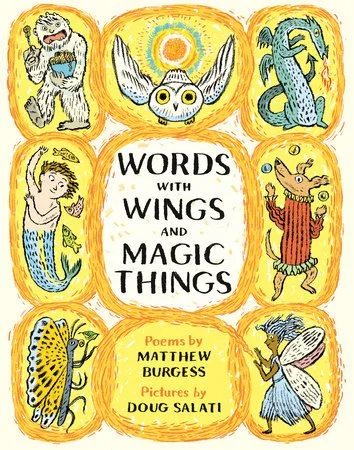
Words with Wings and Magic Things is a whimsical illustrated poetry collection for young readers. Divided into thematic sections, including “Wonders”, “Whoops & Wallows”, and “Whispers & Well Wishes”, this book contains over 50 poems showcasing the author’s love of language, words and rhyme. Readers can’t help but smile at its combination of silliness and heart. Burgess’ poems are a playful celebration of imagination, being yourself, and making magic out of the mundane. “Things You Can Do”, “Alligator on the A Train”, “The Tiger in My Belly”, “Me in This Tree”, “Flowerful”, and “Voice” are particularly lovely pieces. Salati’s colourful and dynamic illustrations are positively delightful and perfect companions to the text. While not for every reader, this book is an excellent choice for young wordsmiths and poets, especially when read aloud.
Review: The Rehearsal Club
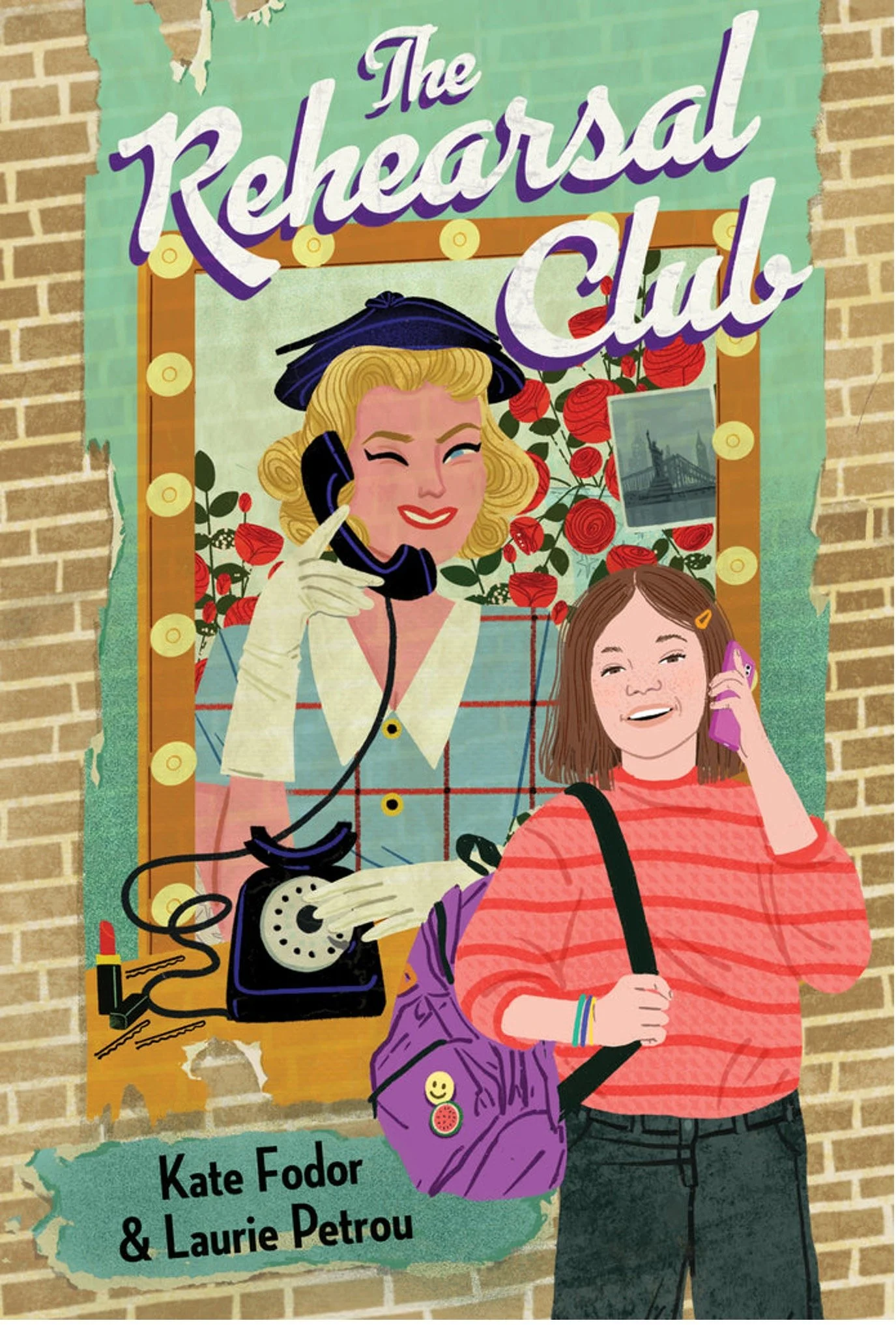
Pal and her parents have recently moved to New York City. Her older sister, Naomi, already lives there at an old establishment called the Rehearsal Club, where young women in pursuit of an acting career board. While visiting Naomi one night, Pal stumbles across a box of old Rehearsal Club documents from the 1950s–among them, a picture of Olive and Posy, and a document indicating Posy’s dismissal from the Rehearsal Club. Intrigued, Pal is determined to find out why Posy was dismissed while coming to terms with mistakes she’s made in her own past—and brings with her the friends she's made along the way. Switching between the present and the 1950s, this novel’s straightforward writing and classic mystery structure make it appropriate for children ages 9-12 years old. Themes of forgiveness, sisterhood, and intergenerational friendship are present. There are no illustrations.

Review: The Immortal Woman
The Immortal Woman spans multiple generations, beginning with Lemei, a student Red Guard leader in 1960s Shanghai. As a journalist, she witnesses an act during the Tiananmen Square protests that sparks her determination for her daughter, Lin, to move to America and remove all trace of her Chinese identity. In America (and later Canada), Lin attempts just this, but eventually faces the reality of being a Chinese-born immigrant in North America and what it means to erase her heritage. While character development is at times lacking and the vocabulary choice occasionally jarring, Su Chang paints a complex picture of intergenerational trauma and the meaning of home. This book assumes a certain level of historical knowledge, and contains some violent and sexual content, appropriate for readers 17+. There are no illustrations. A PDF guide with discussion questions is available on the publisher's website.

Review: The Cranky-Verse
Constructed in three mini storylines divided by intermission-like sketches, Cranky Chicken is a graphic novel that follows Chicken (who is generally cranky) and their friend Speedy, a worm. The first act depicts the two of them accepting a new family member, Wags, the turtle. The second act shows Chicken attempting to be non-cranky and supporting Speedy through an injury. In the third act, Speedy changes Chicken’s mind about camping. The illustrations propel the storyline and keep to a soft colour palette of purple, red, and yellow, while the dialogue is simple and easy-to-follow. Overall, this is a light-hearted read that humorously addresses themes of found family, familial support, and the ability to change your mind. Suitable for ages 6-9.

Review: Sunny Wants to Play
Sunny not only lives with her parents and grandparents, but also with her aunts and uncles. Although she has such a big family, she often feels lonely being the only child amongst adults. When a neighbour knocks on her door, Sunny soon lea rns that while it is fun to have other children to play with, being alone also has its advantages. Author/illustrator Katty Maurey does a great job of introducing elements of her Chinese heritage into the story while making the focus an everyday topic any child can relate to in some way. Sunny Wants to Play can be a useful discussion tool for an only child struggling with loneliness. It delves into the struggles of only children in an easy way for them to understand, serving as a reminder that the grass isn’t always greener on the other side—there are perks to being an only child! The simple sentence structure and short text make this beautifully illustrated picture book a good first read for young learners and an excellent addition to any child’s library.

Review: Safekeeping: A Writer's Guided Journal for Launching a Book with Love
If you are in the process of writing a book or simply curious about the publishing world, Safekeeping is an incredible resource for any writer's toolkit. This non-fiction journal invites readers to prioritize their own essence as writers through self-reflective prompts and practical advice to get their book finished and published. Chelene Knight invites readers to reflect upon important questions that every writer should ask themself before, during, and after the publishing process, and each chapter invites readers to set intentions and affirmations to help them never lose sight of their core values. Prompts include space to write underneath that encourages readers to transform the book into a personalized resource they can revisit throughout their writing journey. As someone interested in publishing a book of my own, I found this to be a wonderful tool because it prompts writers to self-reflect, question every aspect of the writing process, and learn to set boundaries. However, its inclusion in a library might not be ideal due to the blank spaces intended to be filled in by the reader.

Review: Rock
Mistaking a rock for food, a seagull bullys the rock, trying to make it doubt its sense of self. Whether the seagull sees it as an ordinary stone or a pebble destined to be washed away, the rock remains unmoved, asserting itself as what it is–a rock. A child playfully approaches and chases the birds away–they see the rock for how truly special it is. This story is written with so much care that each page makes the reader feel what it is like to be criticized and how we can stand firm in who we are despite it. The illustrations of this picture book are vibrant and emanate a childlike wonder, making it suitable for those ages 3 to 6 years old. I believe this would be an excellent addition to any library, especially because its universal message highlights just how important it is to stay true to ourselves while reminding us that those who matter will appreciate us for who we are.

Review: The City of Lost Cats
The City of Lost Cats novel centres on Fiona, a 12-year-old who is not happy with her summer camp and runs away, only to discover an abandoned house full of stray cats (and a couple of birds). The story is told in the third person from a variety of perspectives, indicated by chapter headings: Fiona, a demolition worker, three cats and the parakeets (who uniquely speak in verse). While the reader is privy to the thoughts and conversations of the animals, there are no talking animals in Fiona's world. Flyers, emails, and other inserts appear between chapters, add interest, and supply information and foreshadowing. While the main plot is whether Fiona will be able to save the building from demolition, there are enough plot twists and side stories to keep readers' interest to the final resolution. The City of Lost Cats is a satisfying story about community, touches on homelessness (both animal and human), and will appeal to young animal lovers everywhere.

Review: Sundays are for Feasts
Today is Sunday, and Sundays are for feasts! Excited, Yasmine offers to help her family prepare. Unexpectedly, Yasmine is tasked to help make the hummus, which she has never made before. Daunted by the task given to her, Yasmine worries she will mess it up and that her finicky Ammou Farouk will hate it. She has seen her Baba make it before... perhaps she can recreate it? This adorably illustrated picture book is relatable, as we have all faced tasks that have daunted us at one point in our lives. Seeing Yasmine struggle with uncertainty and self-doubt is something anyone can empathize with. This story could serve as a tool for children who suffer from performance anxiety, as it ends with a message that what matters is that we try our best and not focus on what could go wrong, and that our efforts are recognized, whether we are successful or not. A glossary of terms and a recipe for hummus for all to enjoy are included at the end of the story. Sundays are for Feasts is perfect for any home, school or public children’s library.
Review: River of Spirits
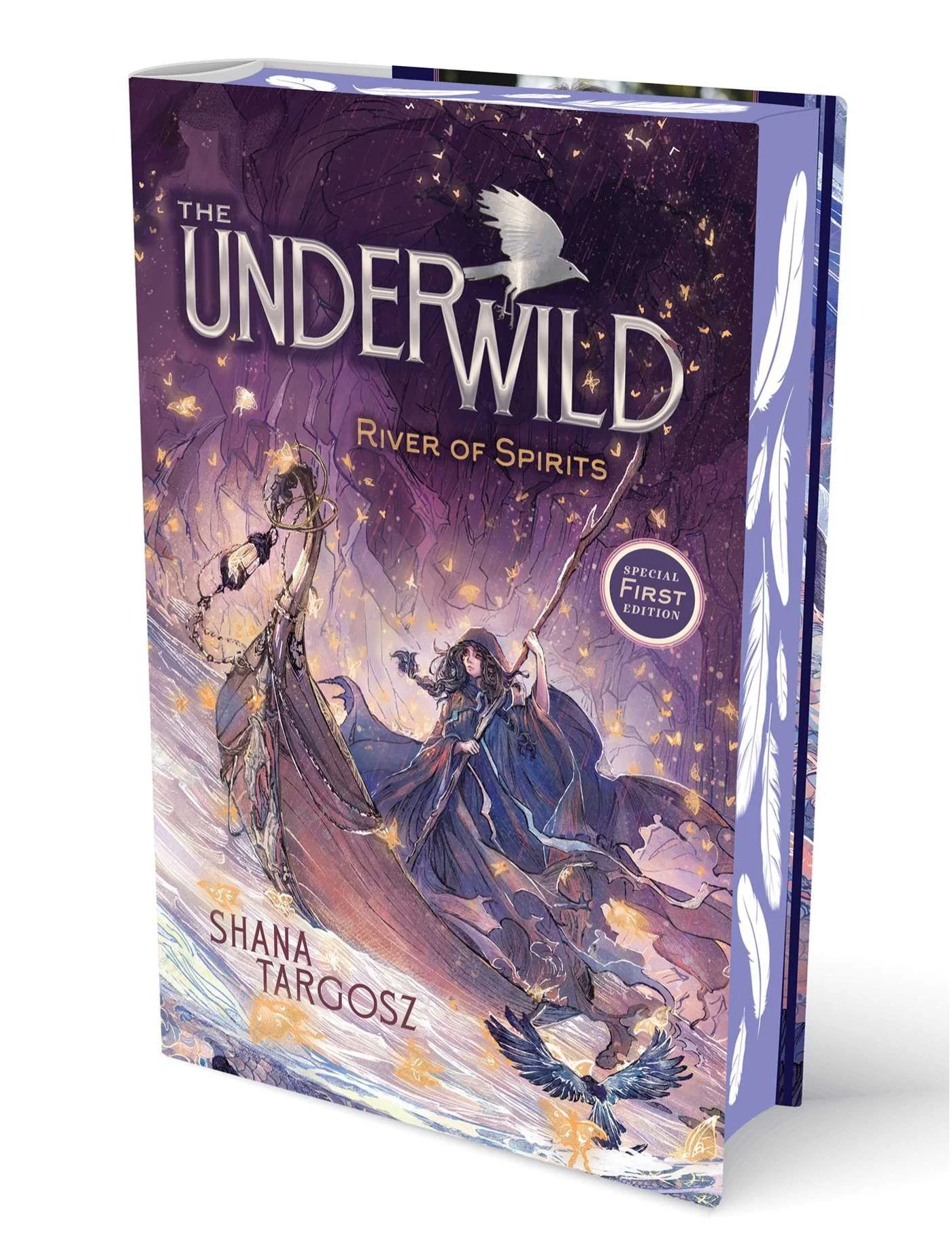
River of Spirits is Shana Targosz’s stunning debut novel and the first book in The Underwild series, perfect for fans of Percy Jackson. The story follows Senka, a girl raised between the realms of the living and the dead who dreams of becoming a Ferryer like her mentor and father figure, Charon. But when she breaks sacred Ferryer rules to help a grieving girl named Poppy, the two are swept up into a perilous journey through the Underworld where Senka uncovers long-buried secrets about her past. As Senka navigates the Underworld, she begins to question who she is outside of Charon’s guidance, finding her own agency. Balancing eerie encounters (gods, spirits, and monsters) with hilarious dialogue, River of Spirits explores themes of grief, identity, and the afterlife. The novel’s stream-of-consciousness prose creates an intimate connection between Senka and the reader. With a diverse cast and a richly imagined setting, this thrilling and witty adventure is a must-have for any library or school!

Review: Mrs. Nobody
Alice and Mrs. Nobody are friends who love to play games and make mischief, but they usually do what Mrs. Nobody wants. When Alice and Mrs. Nobody disagree about what game to play next, it leads to a fight, and Mrs. Nobody gives her friend the silent treatment. Alice doesn’t want to fight, but she also doesn’t want to do what Mrs. Nobody says all the time! This is a creative story about a girl learning to set boundaries and assert herself. The illustrations are absolutely beautiful, with an array of (stuffed?) animals acting as silent side characters, complete with fantastical outfits and backdrops. There is an added level of visual storytelling when Alice’s clothing changes to mirror Mrs. Nobody’s marvelous fits as she asserts herself and learns to say “no”. The book’s creativity and whimsy give the impression that this story could be taking place in a kid’s imagination. Mrs. Nobody is a good addition to a public library collection.

Review: I Would Give You My Tail
I Would Give You My Tail is a delightful and heartwarming picture book by famed Inuk throat singer and writer Tanya Tagaq. It tells the story of Kalluk, a young Inuk boy who travels to his grandparents’ camp when his mother is in labour. On his way, he meets many creatures and asks them what makes them happy. Each response teaches him a new lesson and reminds him of all he is grateful for as he journeys back to meet his new little sibling. Tagaq’s story is deeply moving, encouraging both child and adult readers alike to reflect on their relationships with other people, animals, and the environment and to consider what we can offer each other. Manumie’s illustrations are simple, whimsical and imaginative, and perfectly compliment the text. Full of gentle wisdom and an Inuktitut translation and pronunciation guide, I Would Give You My Tail is a truly special book that belongs on every bookshelf.

Review: Head Full of Clouds
This beautifully illustrated fictional picture book explores the experience of getting lost in the world around you—only to become more present than ever. A young child awakens, trying to remember a dream, and embarks on a journey through their surroundings, where imagination and reality intertwine. Through poetic language and immersive, dreamlike illustrations, the story captures the magic of everyday moments. A simple puddle on the street transforms into a vast underwater world, like a portal to Atlantis, revealing the wonder hidden in the ordinary. The flowing, surreal artwork enhances this sense of discovery, drawing readers into a world where small details can be extraordinary. A gentle and meditative read, this book invites children to slow down, observe, and embrace mindfulness through the act of truly seeing and feeling what is around them. An absolute joy to read and highly recommended for all children!

Review: Wellwater
Wellwater, Karen Solie’s sixth book, provides thoughtful, occasionally wordy poems that interrogate the housing, environmental, and economic crises of the present. In free-verse, the poems follow something of an emotional narrative, ruminating on malaise before transitioning to a fresher series on nature. Solie brings out lyricism from decay while still underlining its ache and undesirability. Recurring imagery of agricultural practices–economic exploitation of land, at times technical diction of herbicides, GMO seed patents, trademarked chemicals, and several mentions of glyphosate–gives some poems a deliberately analytical feeling. Landlords, rent, and other pains pervade the poems; in “Toronto the Good”, landlords are suddenly able to make apartments habitable only after “renevicting” their longtime tenants. Occasionally, some elements in the poems were left a little too unsaid; for example, “Basement Suite” is about an Airbnb, but the poem’s meaning is more obvious from the back cover than the poem itself. Wellwater would be a good addition to Canadian poetry collections in public libraries.

Review: Sometimes I Eat with My Hands
Sometimes I Eat with My Hands illustrates Feven’s journey as she tries new foods and a variety of eating methods. The final scene shows Feven and her family eating injera together with their hands. Ultimately, this picture book portrays the importance of trying new things and that there are different but equally suitable ways to eat. The colourful images and minimal text make this book suitable for ages 3 to 6. An author’s note at the end provides information about Ethiopian and Eritrean cuisine and customs for educators. Sometimes I Eat with My Hands would be a great addition to school and public libraries and can spark discussions about how culture shapes how we view table manners.

Review: Shadow Price
As its name suggests, Shadow Price is a collection of poems that explores the hidden cost we attribute to everything, serving as a symbolic nod to the capitalist society we live in. Farah Ghafoor prompts us to question our collective humanity and the blissful ignorance of our actions, as well as their hidden impact on the environment and humankind. With surreal imagery and poignant wording, the reader is confronted with uncomfortable truths that challenge them to reflect on how their everyday actions contribute to larger global issues. Whether referencing the absurdity of the stock exchange, climate change denial, or the irony of self-care product marketing, Ghafoor’s words hold up a mirror to society, asking whether we still have time or if it is already too late. I personally found this collection of poems gut-wrenching, considering our current climate. The complexity of language and thematic symbolism throughout the poems make them perfectly suited for an audience of adults that are interested in social justice, climate change awareness, and environmental advocacy. I believe it would make an excellent addition to any library due to its cultural relevance and the creative way the book addresses these topics.

Review: The Creation of Half-Broken People
The Creation of Half-Broken People is a work of literary fiction told from the perspective of an anonymous woman who sees visions of three other women. Entangled with the Good family (descendants of King Solomon’s Mines’ Captain John Good), the anonymous woman travels to Holdengarde castle in Zimbabwe to plan a centennial celebration for the Good Foundation. During her time there, she writes the stories of the misremembered, misbegotten, and forgotten women in her visions. Though not immediately attention grabbing, Ndlovu writes in a simple yet flowing prose that sweeps the reader along in an overall engrossing story that transcends generations. Addresses topics of colonialism, mental illness, and race. For ages 15+.

Review: Benny on the Case
Benny, who has mosaic Down syndrome, and Salma, who is new to the area, become fast friends on their first day at school together. After a series of thefts, an inspector threatens to close the retirement home where Benny and his mother live and work. Benny and Salma navigate bullies and prejudice at school and spend their evenings trying to figure out who is stealing from the home's residents. Mr. Tom, an eighty-six-year-old resident and Benny’s best friend, helps the sleuths on the sidelines. More than just a nail-biting, page-turning mystery, Benny on the Case is a heartwarming story with the added value of its setting and its main characters navigating treatment as outsiders by their peers. A must-read for all Canadian kids aged 8 to 12, this middle-grade novel begins with a glossary of the Newfoundland terms that figure prominently in the story and adds to its charm.
Review: Zeke the Weather Geek: There’s Mud in My Flood!
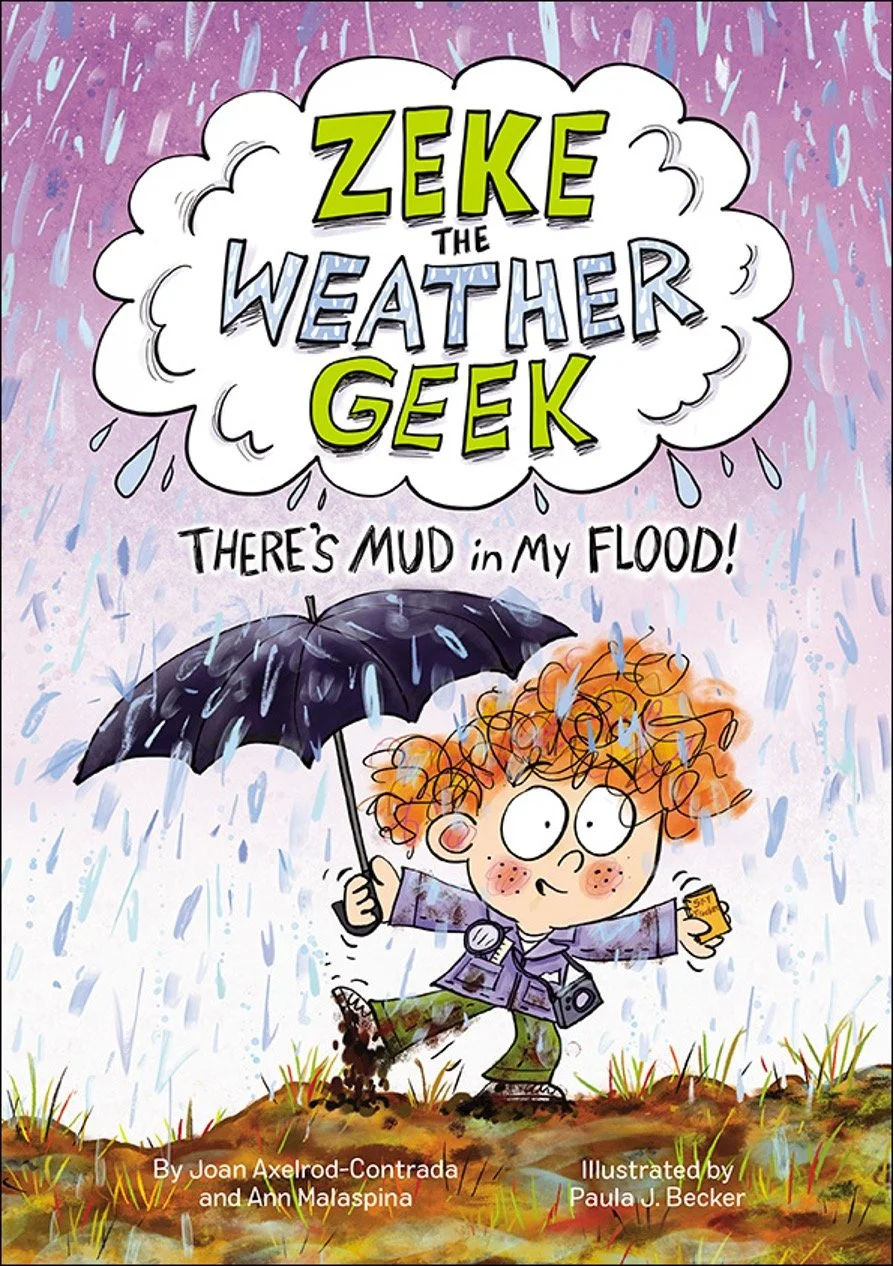
Weather-obsessed Zeke is very concerned about evolving spring melt conditions that are perfect for a flood. The story follows Zeke over 12 days as he tries to balance unwelcome class play, interactions with classmates he doesn’t like, his fulfilling new “job” as Weather Watcher, and saving the town from the flood. The book has a vibrant cast of characters who are all passionate about different things and contains many well-written sections of factual information about weather conditions, satellites, seasons, etc. The narrative incidents are fun and the illustrations charming. The pages with factual information have a gray background so it’s easy for readers skip the facts and follow the story only or return to the facts if they want. Note that climate change is mentioned several times, which can spark discussion, and temperature is reported in Fahrenheit throughout (with Celsius discussed in a facts section).