

Review: We Are Dreams in the Eternal Machine
A fictional novel with immense relevancy, We Are Dreams in the Eternal Machine illustrates how life would look if our existence were controlled by an artificial intelligence machine. The machine concludes the best way to protect all humans from others and themselves is to isolate them in controlled rooms, many of which induce an imagined or fantastical dreamlike state. The novel tells the story of five protagonists as they navigate their past memories and the existential dread that comes with getting everything they’ve always desired. Whether it's the promise of immortality, complicated family dynamics, genetic modifications, gender politics, or class wars, Deni Ellis Béchard’s writing perfectly encapsulates the relevant budding topics of our generation. Filled with a building tension throughout, the book envisions a dystopian not-so-distant future that explores the meaning of human life. I personally found this book significantly pertinent to read, especially the moments where I could envision the deconstruction of the protagonists' new dreamlike reality unraveling before their eyes—much like the fleeting nature of real dreams. This adult novel would be suited for those who want to read about an imagined world that explores the potential ethical and philosophical dilemmas created by the technological advancement of AI.
Review: Towed by Toad
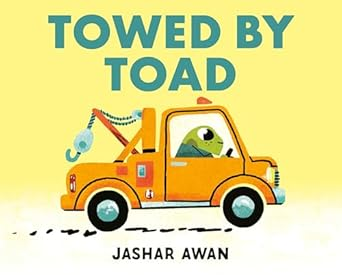
Toad is always eager to help those in need. Whether it's a flat tire or an engine that falls out, Toad is there in a flash. However, when the time comes for Toad himself to need help, he has a hard time accepting it. Toad soon realizes that if he’s in need, he should ask for help. The large print combined with short, rhyming text makes this adorably-illustrated picture book an excellent first read for young learners. It can also be used as a learning tool during story time to teach young children that it’s okay to not have it all figured out and that it’s also okay to ask for help when you need it. Towed by Toad is an excellent addition to an elementary school library, the children’s section of a public library, or for home.

Review: The Boldest White
The Boldest White is the third installment in the Proudest Blue series from the authors and illustrator team, Muhammad, Ali and Aly, about Faizah and her sister, Asiya. Faizah feels safe when she is part of a crowd. She is just as at ease at both Jammah prayers and her fencing lessons. But when her classmates watch her, she freezes up! When her coach suggests she compete in an upcoming tournament, Faizah doesn’t know if she can do it. The Boldest White is a sweet story about learning to be brave. The text is simple and age appropriate. The artwork is engaging, with bright, warm colours that show Faizah’s mood and world. There is a particularly lovely spread that features one the book’s central messages about Faizah learning to nurture her bravery in her heart and mind. This heartwarming, diverse read centres a Black Muslim family and their community. Appropriate for children 4-9. Other titles in the series: The Proudest Blue; The Kindest Red.
Review: The Ballad of Darcy & Russell
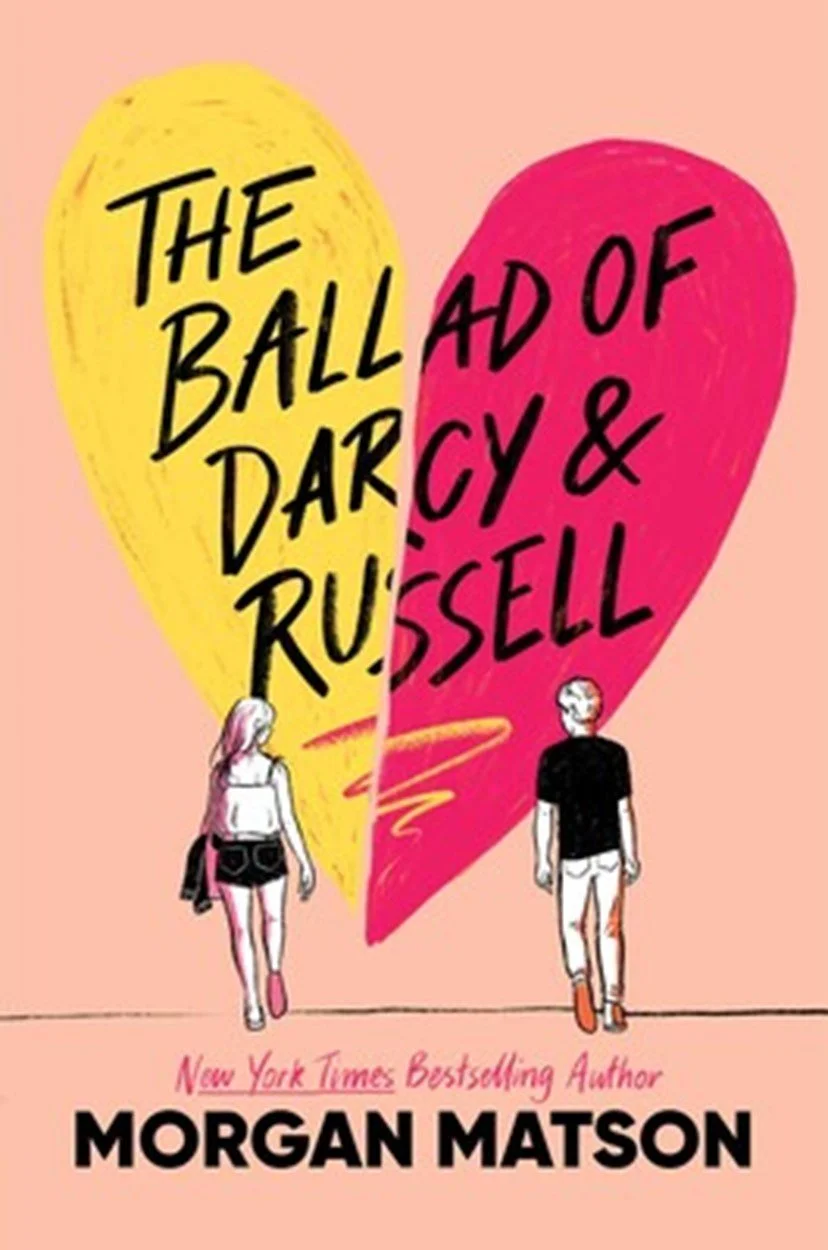
The Ballad of Darcy and Russell tells the story of high-school seniors Darcy and Russell as they grapple with their feelings for one another after having met quickly. Together, they navigate a romantic whirlwind and grapple with their own personal aspirations during a pivotal time in their lives. The story lacks depth in terms of how it depicts Darcy and Russell’s relationship, and I found it dragged on and was difficult to finish. I think it could be a good addition for a library’s collection and is a book that is best suited for children above the age of 11.

Review: The Afterdark
Evie has an identical, evil twin sister. After said twin’s unexpected death, their emotionally withdrawn mother packs Evie off to the prestigious and remote Northcroft Academy, a boarding school on an island off the Pacific Northwest coast, where her father, who refuses to see her, is the principal. Enter Holland Morgan, teen star, Evie’s childhood crush, and now roommate. A queer horror/love story exploring themes of female rage, obsession, and the inherent urge of teenage girls to think they’re the monsters, The Afterdark takes place in a rich, atmospheric and decaying setting complete with ivy-covered walls, towering, vaulted ceilings, and stained-glass windows. The mystery elements are well-constructed and engaging. The Afterdark is a lot of fun, leaning equally into gothic romance and horror elements. I did wonder at the lack of attention–media, parental, or otherwise–after so many student disappearances, particularly as the students are well-off and well-resourced, a good combo to kick up a fuss. Recommended for ages 14 and up for its honest, unrepentant swearing and some steamy moments, The Afterdark would make a great addition to any school or public library.

Review: Others Like Me: The Lives of Women without Children
Others Like Me is a compilation of personal, bite-sized anecdotes averaging a few pages each based on recorded interviews with the author. The anecdotes are not accompanied by a by-line, making it difficult at times to tell who the speaker is. Is the anecdote a direct transcription from the interview, or is it the author’s interpretation? Individuals are mentioned by first name, but there is often little indication of their relation to the speaker. Many perspectives are included, but the one that hit home for me was the struggle to believe your partner when they say they are happy being childless with you and the relationship strain inherent to going against convention. Others Like Me is a great read for those interested in the lives of people without children. Though written for adults, older teens may also find the stories compelling. The author’s book club guide is available as a PDF on the publisher’s website (scroll down to the last page for the discussion questions).

Review: My Grammie’s House
A child walks down memory lane as they describe all the great features of their grandmother’s house to potential buyers. Throughout the tour, we get a glimpse of the love the child has for their grandmother and her house, as well as all of the moments that make a house a home. Canadian author Lana Button really addresses the topic of change in a delicate way that young children can understand. Whether a loved one is moving or has passed away, this delightfully illustrated picture book can serve as a great conversation starter with young children. My Grammie’s House would be an indispensable addition to any child-focused library.

Review: Fantastic Lou: Little Comics from Real Life
Fantastic Lou tells the story of Lou, an adventurous and curious boy with boundless creativity, playful dance moves, and a unique zest for life. Each comic lets us peer into the beautiful chaos of Lou’s day-to-day adventures. Whether he is waking up his parents in the middle of the night, role-playing as a ninja, or listening to mom’s bedtime stories, we get to revel in these silly moments alongside him. With her graceful and simple illustrations, Qin Leng perfectly captures the raw, sentimental, and whimsical essence of youth that is found in the everyday moments of childhood. This hardcover graphic novel is inspired by real-life moments and is written for those ages 5 to 9. As an adult, I found myself feeling a warm sense of nostalgia when reading this book. These simplistic yet thoughtful comics are drawn in a linework style accented with a light blue pop of colour. Fantastic Lou is suited for those looking to explore themes of family dynamics, children’s self-expression, and the wonders of childhood.
Review: Dangerous Memory: Coming of Age in the Decade of Greed
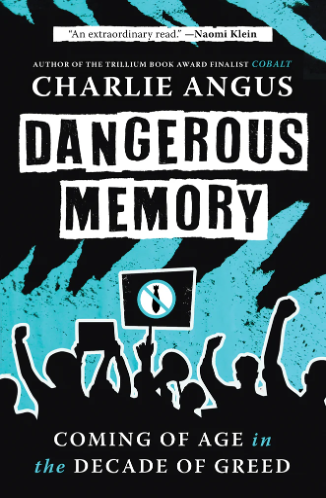
This important nonfiction title reads like a memoir but is infused with historical information and guided by an intimate understanding of the bigger picture. Charlie Angus, a former punk rock band member and current Member of Parliament, recounts his experiences as a young adult in 1980s Toronto. The stories are compelling and interesting, and connected to current topics of great public concern. Today's situation is explained by decisions made in the 1980s (some of which are shocking in hindsight). There is hope, however, that the knowledge of these beginnings (Dangerous Memory) will arm current activists to take a stand and turn against the current tide. A must-read for any disillusioned Canadian, this book will resonate most with adults who have lived through the 1980s. Some mature teens may find relevant parallels, as well. Footnotes and a bibliography provide sources. Some historical photos are included.

Review: Boy Here, Boy There
After a long journey to a new home, a boy explores the valley around him. Filled with a sense of wonderment and exploration, the boy admires the animals, nature, and people he encounters. Boy Here, Boy There is a look into what a day in the life of a young, prehistoric child might have been like. The beautifully illustrated two-page spreads are illustrated in what look like soft, brush-like strokes, imbuing us with the feeling of the calmness that nature brings. The text itself does not seem to match the beauty of the illustrations. The way the book is written seems to imitate the way a prehistoric person may have spoken, giving the story an unfortunate mocking-like quality. Despite this, this picture book could serve as a good introduction to prehistory in the classroom. The book also includes an author’s note at the end with more information on prehistoric peoples.

Review: Baby Animals Trying : a Celebration of First Moments
Baby Animals Trying is an adorably illustrated picture book about baby animals trying new things. From the moment baby rabbits first open their eyes to little orangutans learning to move through the trees, their parents are with them every step of the way. Although the premise is great, the book’s formatting can leave readers slightly confused. Every milestone is depicted on a two-page spread. On the left page, readers are presented with a rhythmic story. On the right page is information about the baby animals’ milestones. There is little difference in font size and type that would help make the distinction between these two pages more apparent. A preface explaining the two ways the book can be read or even little “factoid bubbles” for the non-fiction text would be helpful. The back matter includes a more in-depth explanation on the animals’ milestones, making the non-fiction text slightly redundant. Due to its confusing nature, Baby Animals Trying would be better suited in a school setting rather than an at-home read.

Review: Amir and the Jinn Princess
This middle-grade fantasy novel follows Amir, a 12-year-old boy who does not want to be heir to his family’s brick-making empire in Pakistan. He just wants to find his missing mother. When he meets Shamsa, a jinn princess, the two strike a deal: she will help him look for his mother in the jinn realm, and he will coach her through a series of challenges as she competes for the jinn throne. Soon, their worlds begin to collide in unexpected ways, and they must learn to trust each other while fighting for change in the face of corruption and greed. The fast-paced plot and climactic reveals keep the reader engaged while simultaneously dealing with the serious themes of familial obligation, grief, and vulnerability. There are no illustrations. This book is suitable for readers 9-12 years of age.

Review: A Witch's Guide to Burning
A Witch’s Guide to Burning is a unique graphic novel geared toward children aged 10 and older. It tells the story of a young witch who was burnt at the stake and stripped of all her magic powers and memories. She is found by a wandering witch and a goofy frog who care for her wounds and join her on an adventure to regain her powers. The story weaves together themes of burn out, self care, and found family in a unique way. It can be dark at times, but the storytelling and magical setting balance out the heavier subjects. Despite its vibrant cover, the illustrations are in black and white. A Witch’s Guide to Burning would be a great addition to any elementary school or high school libraries.

Review: The Pony and the Starling
A girl and her mother watch a friendship between their pony and a starling grow from season to season–until a snowstorm looms. The girl puts the pony safely in the barn, but the starling stays outside as the weather threatens. This story explores an unlikely friendship across the seasons from afar. The art is absolutely beautiful, elevating the story and transforming it into a cozy, idyllic depiction of rural life with a focus on two animals. There are no names attributed to the characters nor the setting, giving the story a timeless feel. As it is framed by the girl and her mother’s point of view, the central part of the story –the pony and starling’s relationship–can only be viewed from a distance. It is a narrative that invites in readers' interest and empathy into the lives of animals, domesticated and wild, which is valuable in the context of the immense environmental destruction caused by climate change. The Pony and the Starling is a good choice for public library collections.

Review: The One and Only Question
Zeke is starting at a new school, but one thing plagues his mind–what if someone calls him the N-word? Zeke goes through his day anticipating being called the slur at any moment, just like at his old school. He knows that this is going to be the worst day ever. However, as the day progresses, Zeke realises there is more to life than anticipating the worst. Not only does he make a new friend, but not once is he called the N-word. In response to her grandson asking her the very same question Zeke asks himself, Norma Charles, with the help of her daughter Andrea Charles, wrote this beautifully illustrated book to help address a very big concern that many Black children face when going to school. The authors address this serious topic well and in a way that is developmentally appropriate for young children. A note in the backmatter includes some ways to address bullying and racism for caregivers, teachers, and students. The One and Only Question would be a great addition to any school, public or home library.

Review: The Day I Left You
The voices of characters Henry and Greta alternate in this historical fiction, bringing readers into their past love story and present-day lives where secrets, regrets (and perhaps love?) are still poignant. The Day I Left You tells the story of Greta’s mysterious departure, set against a political backdrop of the German Democratic Republic before the fall of the Berlin wall. This book would be suited for readers aged 12 and up, though older readers may better appreciate the novel’s complex political themes. The Day I Left You is an excellent read for those who enjoy romance, historical fiction, and complex characters.

Review: Shy Me
Shy Me is the perfect picture book for any child dealing with shyness. Whether it be an “I don’t know how” shy or a “don’t look at me” shy, all children will be able to identify with the young child in this story. All different kinds of “shy” are discussed, along with the message there is nothing wrong with being shy, that children have many other parts to them than their shyness, and a small reminder to try to be brave so they do not miss out on anything. With bright colours and collage-like illustrations, Shy Me would be a good tool to use in social–emotional learning for young children at home or in the classroom and would make a wonderful addition to any children’s library.
Review: Marcel with a Splash
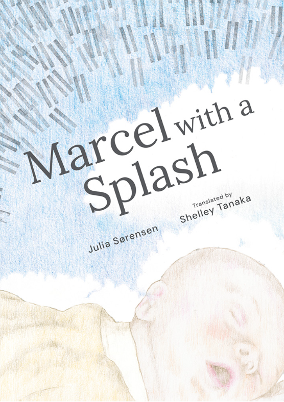
Marcel with a Splash is a tender introduction to children with Down Syndrome. From the time he is brought home to making friends at school, we see Marcel through his parents’ lens. We follow him as he hits milestones at his own pace, makes friends as someone who is neurodiverse, and meets someone else with Down Syndrome. Despite his differences, we learn that Marcel is also just like any other baby or child. The illustrations are drawn in pencil crayon with soft strokes. For a picture book that is supposed to celebrate the joys of having a child like Marcel, there is quite a lot of black and grey in the illustrations. Perhaps it is to highlight both the joys and sorrows that come along with having a child who is neurodiverse. However, as it is a book that is marketed to such a young audience, livelier illustrations and colour may have been a better choice. There is also quite a lot of text for young children. Consequently, I would recommend this book more for children aged 5 to 8. Despite its challenges, Marcel with a Splash would serve as a great tool in discussions of diversity and inclusion in the classroom, and would make a good addition to school libraries.

Review: Everybelly
A child goes to the pool with their mother and encounters a world of bellies. Behind every interesting belly is an even more interesting story. Big, small, round, flat, textured, smooth–all types of bodies and people are illustrated in this lovely picture book by Toronto-based author/illustrator Thao Lam. The spirited illustrations are collages created using different coloured and textured paper. The collages really help to emphasize the different colours and textures bodies have. Everybelly would serve well in an SEL (social–emotional learning) unit on inclusivity and body positivity in the classroom. In a world where children are constantly bombarded with societal expectations and unrealistic beauty standards in the media, this book can help young children see that not only is every body beautiful, there is so much more to the people who have these bodies than their appearance. Due to the amount of text, Everybelly would be better suited for children a little older than the recommended age range of 3 to 6 years old–perhaps for children around age 4 or 5. Everybelly would be a fantastic addition to public, school, and home libraries alike.

Review: As You Wish
In this hilarious and heartwarming rom-com, eighth-grader Birdie is determined to make this year unforgettable–she and her best friend Deve are going to rule eighth grade by getting into relationships with popular kids. Two problems: Birdie’s overprotective mom and the fact that Deve is totally against her plan. Birdie thinks her problems are solved when Anansi, a West African trickster god disguised as a new girl, grants her three wishes. The comical fallout from Birdie's wishes has her cursing the day she ever trusted a trickster. Jones' As You Wish expertly blends tween angst and humour, with witty dialogue and an immersive world that is sure to pull young readers in. The novel beautifully explores the nuanced relationship between a daughter and her mother struggling with severe anxiety, the challenges of divorce, and the complexity in developing more-than-friends feelings for a best friend. The bond between best friends is presented as a heartwarming, supportive, and healthy example of love for young readers.